Auxunits in Northumberland
Newcastle Evening Chronicle April 1968

27th April 1968
Twenty eight years after that long, hot invasion threat summer of 1940 the North-East former resistance men ponder what is now one of Britain’s most fascinating historical problems. What would have happened to the civilian population had the Nazis arrived?What was their destiny if wounded or captured? To a man, they knew the answer to the final question. If wounded they would have been "disposed of" by their own colleagues as a hindrance to operations. If captured, there would Gestapo interrogation, torture and death. At best they could only hope to protect their families by giving themselves a false identity. But how long could they have gone undetected in their underground lairs to harass the invaders, blow up supply columns, tanks, railways and bridges and infiltrate enemy headquarters to smuggle out information? The answer given by almost all: a month, at the most. Anthony Quayle went further. Patrols such as the Stobswood "Death or Glory Boys" he thought would be about two weeks. Those chaps were bursting for action. They would have been very daring and caused a great nuisance to Jerry. But I think two weeks would have seen them out of action. They would, of course, have taken an awful lot of Germans with them". More effective, over a longer time would have been the "quiet fighters" such as Mr. Peter Robson, Alnwick’s one armed mole-catcher. "I always regarded Peter as a great but very quiet man. He was a fascinating person and his knowledge of the countryside was truly amazing. "He had that vital ingredient of the underground fighter which I define as patience. We always taught out men to regard darkness as their friend. "If they had eight hours of darkness to complete a job, they were told to take four to get there and four getting back. "That really takes patience and Peter I recall as one of those who had it. The break-up of underground cells would have been inexorable following the capture of individual resistance men. "But meanwhile, they would have made themselves dashed awkward to the Germans—an absolute pest, in fact. They could not have affected the overall issue because it was beyond their scope but they were wonderful chaps and would have given a great account of themselves.
RED ALERT HOW CLOSE DID THE INVASION COME??Mr. Hall, the former Bedlington banker, recalled there was a three-tiered system of callout for the resistance men. Red alert—Germans are approaching. White alert—he has landed. Blue alert—all resistance men go to earth." We got a—red alert once, I was in a cinema when my name was flashed on the screen as ‘Wanted by Police’. I went out and was told to telephone a pre-arranged number for instructions from my leader. "I contacted all my men and we stood by to await the white alert. It never came". It happened ‘early in the war’ he recalled.
One of the more astonishing facts to emerge during inquiries into the North-East’s resistance movements came during conversation with one former leader. He was at first reticent, then finally said: "I suppose it’s safe enough to tell you now". What he revealed was the overall battle plan for the North-East in the event of invasion. It meant, in effect, that the Home Guard, bolstered by their resistance colleagues would have fought alone in Northumberland had invasion taking place. "The Home Guard were regarded as dispensable troops. All the regular troops would have been withdrawn to a line South of the River Tyne. Other forces would have been rushed up from York. But the Home Guard would have been on their own" he said. This was one of the North East’s most closely guarded war secrets—and will no doubt surprise many former Home Guard personnel who thought their duty would be to augment regular forces.BLACK LISTS
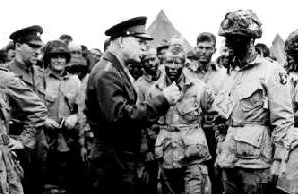
What fate awaited the civilian population is horrifyingly out lined in David Lampe’s book "The Last Ditch". Gestapo troops, headed by Dr. Franz Six—later sentenced for war crimes, but now living quietly in Germany—had a top secret list of people earmarked for immediate arrest. The entire male population of fighting age would have been transported to the Continent. A military government would have had the power to execute resistance workers. Among those on the Gestapo arrest list were the late Ellen Wilkinson, M.P. for Jarrow, and Sir Will Lawther, the former miners leader, now living in retirement in Whitley Bay. "In fact, I was on two of their secret lists", he said this week. "That’s quite an honour I suppose". Sir Will was elected president of the Miners Federation in July 1939, but had been politically active for many years—sufficient to justify his arrest and extermination by the Germans, he thought. "Obviously, although I hadn’t seen their list, I had a very good idea they would want me if they arrived. I was living in a miners agent’s house at Durham Miner’s headquarters in Durham at the time and I decided to stay until they marched up to the door. "I had made no plans to move away or hide. My only decision was to take two shots at them for every one they fired at me". Sir Will first heard he had been officially "wanted" by the Germans when he went with a TUC delegation to help re-form the German trades unions shortly after the war. There, he was invited to become the first civilian to broadcast over their reconstituted German radio service. The man who was deemed among the Nazi’s key arrests did not fail the occasion." I told them that it was possible they might be forgiven by the world—but they’d have to dig their heels in and buck up their ideas". In the event, the invasion did not take place and what could have happened under a Nazi regime is speculative. For the resistance men of the North-East, however, there was one final, odd chapter to be written into their history. It was recalled by Mr. Hall. On D-Day, as the invasion fleet gathered along the coasts of southern England, a series of messages were flashed to secret Headquarters in the North-East. The resistance fighters were told to gather at their local railway stations.At Newcastle Central, Mr. Hall—the senior officer—was put in charge of the entire train, already carrying similar groups from Scotland and northern England. They included the Carmichael brothers and Mr. Peter Robinson, with a group of his Seahouses men. The train clattered south and all were mystified. At London there were still no orders but yet another train waited in the sidings to whisk them to Southampton. Boats were waiting. The still mystified patrols boarded—and in sight of the entire invasion fleet, with curious troops peering from beneath camouflage nets, they were ferried to the head of the seaborne columns. "Obviously, we felt we were going to play some key role. The entire invasion fleet was looking at us but we had no idea what was going on", said Mr. Hall." Finally we left them behind and arrived at the Isle of Wight. There we were told that in the event of an invasion the Germans might land on the Isle of Wight as a counter diversion. "Our job was to stop them". The Northumberland men stayed on the Island for two weeks, when it became apparent that they would not be required. Some recalled the night of D-Day with especial clarity. "The blasts could be felt, they actually shook me in my bed", said Mr. Hall. "It was a very unusual period for the auxiliary units" recalled Lambert Carmichael. "I can remember our men doing night patrols on the Isle of Wight at a time when it was thought the invasion might fail. There seemed to be hundreds of them around. One of my men broke the tension when he said: "If those damn cucks stop "oooing", we might hear something!" Bob Hall, with his patrols on guard at an island, later discovered a war secret that has remained so until he told the Evening Chronicle. "This was actually a hospital but in a very small way. There were Red Cross symbols on the ground but it was in fact, a top secret communications centre. "They had a land line laid right under the English Channel into occupied France. It was there throughout the entire war", I understand. Unknown to him, Mr. Hall’s daughter Mildred was nearby at the time as a member of Eisenhower’s invasion staff. On invasion night, a message was flashed to her. Years later, Mr. Hall thought it was probably received over the same land line that he had guarded. "The message simply said: ’Invasion—Failure’ Mildred told me that she went outside with a friend and sat on the steps of the headquarters. It was dark and the two of them started to cry", said Mr. Hall. "Then a man came and put his arms around them. He told them not to cry-everything would be alright. Events proved him right,
It was General Eisenhower.
Text supplied by Mr. Charles Richards from original articles in the Newcastle Evening Chronicle
ã Newcastle Chronicle & Journal Limited