Auxunits in Northumberland
Newcastle Evening Chronicle April 1968

26th April 1968
The Germans could have had the North-East in the forefront of their battle plans to judge from a wartime memento held by Mr. Lambert Carmichael, a prosperous Tweedmouth farmer, who led the resistance in his area throughout the war. It is a map smuggled from German headquarters by a former resistance man of his acquaintance, and sent after the war. It covers an extensive part of Mr. Carmichael’s wartime territorial responsibility and gives a significant tribute to German thoroughness. Each village, church, isolated home and landmark is shown in the North Northumberland area. At some time the map had been rubber stamped "Cancelled", knowledge of the cancellation—it happened during the war-would have relieved Mr. Carmichael of much tension at the time." It came as quite an interesting revelation to me. Certainly, there was a great deal of pressure upon us all in the early part of the war, although this did slacken somewhat later, but it would have helped us to know at the time, I can tell you". Resistance in the north of the county would have followed a different pattern to that adopted in the more heavily-urbanised south.The entire northern parts became the resistance responsibility of Mr. Carmichael, based at Scremerston, and his brother, Alan with a group based at Alnwick. Each ran five or six patrols of nine men at scattered points in their areas. Again, all sworn to secrecy and training was carried out with blackened face and hands, by night. Lambert Carmichael, a keen angler and knowledgeable farmer, recalled that he had a store of explosives in his home above the room where his son was born in 1941-and throughout the war his wife did not know of its existence or his activities. "It was better for her not to know of these things", he said. In his patrols were miners from nearby Scremerston, gamekeepers, two of his own farmworkers—still employees—and a man he described as "the best poacher in the North of England". His HQ’s. were in an underground hideout in a den a few hundred yards from his home. It was in the middle of grassland and the sliding "tray" covering the entrance was carefully covered with grass and tended to match surroundings. All the hideouts in the Scremerston area were specially constructed by teams of Royal Engineers from Army HQ at Belford under the control of a cockney, Cpl. Potter, whose ingenuity is still remembered. Mr. Carmichael was unable to say how his name became known to the secret military recruiting team as a potential leader.
He was probably mentioned by the local superintendent of police, he thought. His recruitment followed the Dunkirk retreat and his first task was to form patrols of men of the right temperament. "I started off with two or three men and they looked around to find people they could trust. We had priority, of course to take anyone we wanted". Will Nesbit, J.M.Graham, J.F.Lockie, Mat Aitchison...he recalled some of the names around which his patrols were constructed. Mr. Carmichael, the basis of his resistance group formed then went to Coleshill for the top-secret course in unarmed combat, fieldcraft and explosives. Later, he used this knowledge at training centres to be formed in country homes at Alnwick and at Shielow Castle, north of Belford. At both centres, Norwegian instructors were used---tough men, he recalled. The Scremerston men quickly adapted themselves to their new role once they had learned to handle explosives but there was one tragedy involving a resistance man on training at Felton Quarries. It happened on June 6,1941.An explosive charge was set off and rocks tumbled to the quarry bottom. One man, Mr.Jimmy Robinson, cousin of the Robinson brothers resistance men of Seahouses, stepped forward to examine the fall and was trapped by a second fall. He died later in hospital—the only known casualty of the North-East’s resistance. As they gained experience, the groups hideouts became more sophisticated. One was in the cold frame of a greenhouse at Inland Pastures Farm, Scremerston. The entrance was concealed beneath seed trays and led to the cellar of the house. It was only recently discovered by the new owners, Mr. and Mrs. S.Cadzow." It was obviously for some ulterior motive but we never knew exactly what" they said this week. The group’s patrols increased in daring and some of their exploits exposed what now appear to have been grave lapses of security at some British Army H.Q’s in the area. In one mock attack a patrol got into the headquarters of an Army Group, filtered into barrack rooms and left a note pinned on the sleeping guard which stated: "You’re dead!" The spirit of the times bred camaraderie between the patrol members. Boss and employee would meet in leisure moments for a pint of beer in the Cat Inn, Scremerston. "We privately renamed it the Guerilla Arms", said Mr. Carmichael. He could recall some of the "characters" of the days, the miner whose attempt at marching at unaccustomed drills made ’a sergeant major weep’ he had to give up the attempt". And there was Mr. Robson, the one armed mole-catcher whose fieldcraft was astounding -the man whom Anthony Quayle said "would kill a jerry a day for the rest of his life and probably never get caught". "Yes he was a quiet chap, he was a real countryman", said Mr. Carmichael. Mr. Robson, in fact proved his worth on the secret course at Coleshill when in spite of his disability, he competed against men from all over Britain and came out top marksman. The Northumberland men—with daggers strapped to thighs, faces and hands blackened (they had to be invisible at 20 yards during darkness), their odd saboteur’s uniform of "any cloth that didn’t rustle"-were a formidable lot, said their former group leader. It was a statement borne out by the man who controlled the territory south of Mr. Carmichael’s allotted ‘manor’. He was Mr. Peter Robinson, a farmer of Elford, near Seahouses, who organised key underground patrols in an area deemed by military authorities as "perfect" for a potential invader. Again, it was a "brothers combination" because Mr. Robert Robinson. of Snipe House, near Alnwick, had the responsibility for some territory to the south. Their cousin, Mr. James Robinson, was the only known casualty of the war—described earlier. Peter Robinson recalled last week that his recruitment followed a call a t his lonely farmhouse home by Major George McNichol, the original resistance recruiting officer.
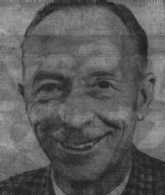
She was also unaware that Mr. Robinson was the local resistance leader although she knew him well. "Well, secrecy was the keynote of our operations", said Mr. Robinson with a smile.
 Next / Previous
Back to Auxunit News
Text supplied by Mr. Charles Richards from original articles in the Newcastle Evening Chronicleă Newcastle Chronicle & Journal Limited